Akaroa, Banks Peninsula
New Zealand · Canterbury

Akaroa, the French colony that landed under a British flag

A harbour town on Banks Peninsula where a French colony landed after the British flag was already up.

$10.9915 stops · one payment
Already bought it? Open your tour

Listen to one stop before you buy

Photo: Bernard Spragg. NZ from Christchurch, New Zealand (Public domain)

Akaroa was meant to be French. In 1838 Jean François Langlois, commander of the whaler Cachalot, obtained signatures from twelve Ngāi Tahu chiefs in connection with a proposed purchase of Banks Peninsula, and in 1839 he founded the Nanto-Bordelaise Company to build a French colony. Then William Hobson signed the Treaty of Waitangi on 6 February 1840 and claimed British sovereignty over the South Island on 21 May.

HMS Britomart reached French Bay on 10 August 1840, ahead of the French naval vessel Aube, and the colonists landed on 19 August. The tour has 15 stops and follows that story through the wharves, the Britomart Monument, the French Cemetery and a Gothic Revival war memorial, with several churches and the old courthouse and custom house along the way. The guide plays in your browser, starts each stop by GPS and works offline once downloaded.

What you hear along the way

Main Wharf

A timber wharf of 155 metres and 40 frames, built between 1887 and 1888 to replace a jetty from 1859. The guide also recounts the 1830 attack by a Ngāti Toa war party at Takapūneke, in which between one hundred and two hundred people were killed.

Britomart Monument

A granite obelisk at Green's Point, raised for Queen Victoria's Diamond Jubilee. It marks where Captain Stanley raised the British flag on 11 August 1840, and the guide explains how the French settlers were still allowed to stay.

Langlois-Eteveneaux House

A two-room cottage built between 1841 and 1845 and described as Akaroa's only genuinely original French-styled building. Look for the steep concave roof and the mock pilasters and cornices on the façade.

Akaroa Courthouse

Designed by Colonial Architect William Clayton and standing on the site of the old French Magasin. The guide calls a British courthouse on the site of the French company's store the story of 1840 told in one plot of ground.

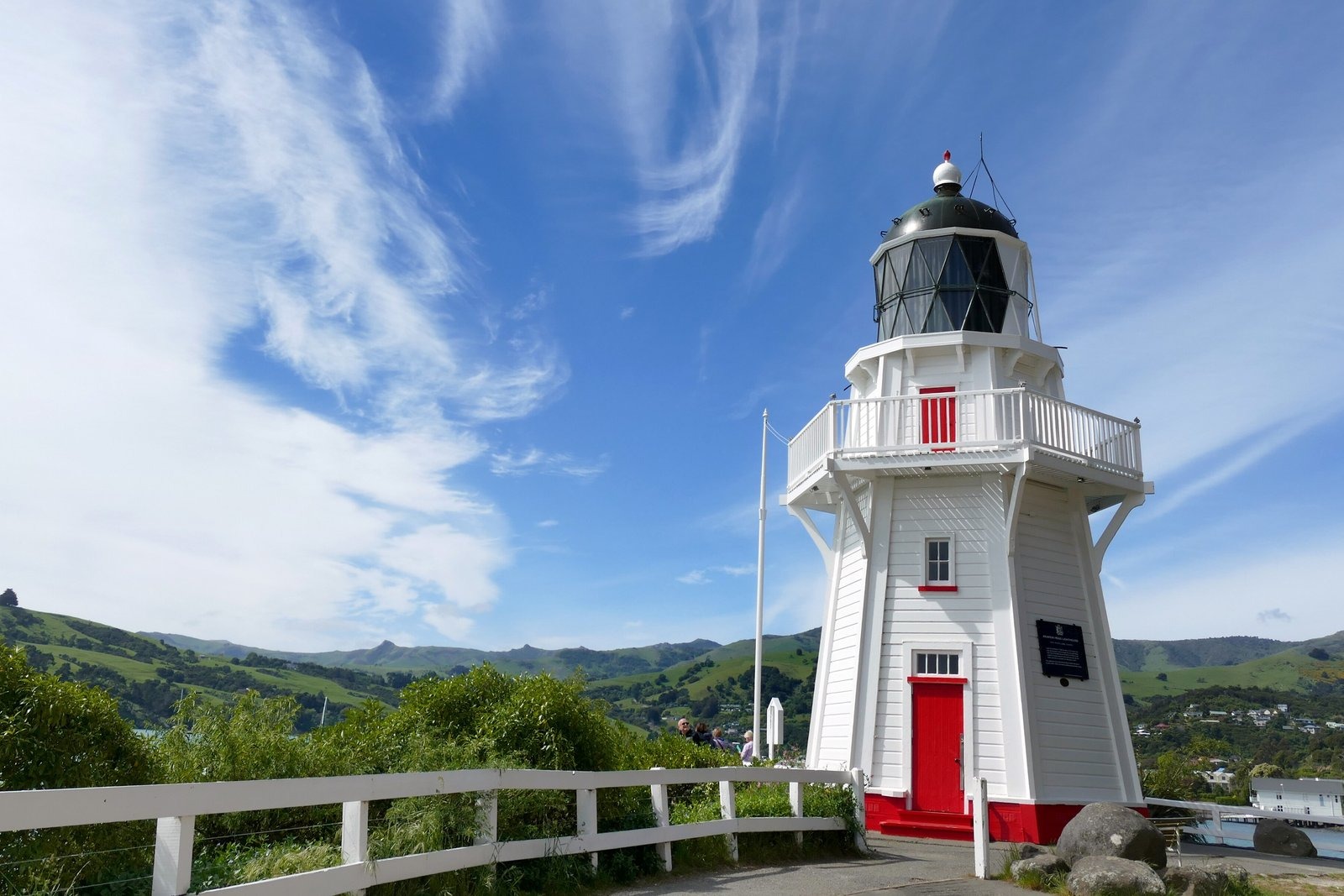
Akaroa Lighthouse

A six-sided timber tower first lit at Akaroa Heads in 1880, with a French lens and a Scottish mechanism. It was cut into three sections and moved to Cemetery Point in 1980, where it was reassembled.

Statue of Frank Worsley

A bust by Stephen Gleeson, set on a plinth of Antarctic rocks once used as ship ballast and facing the southerlies. The plaque covers Worsley's Akaroa upbringing, the Endurance expedition and the 800-mile James Caird voyage.

French Cemetery

A burial ground on L'Aube Hill allocated to the Catholic Mission in 1840 and used by settlers of different faiths into the 1860s. A central memorial lists the names of those known to be buried there, including unidentified early settlers.

St Patrick's Church

A timber Gothic Revival church clad in totara, with a tapered bell tower added in 1893 for an Italian bell. The altar window showing the Crucifixion was made in Munich in the 1930s.

The 15 stops

  1. Main Wharf
  2. Akaroa Lighthouse
  3. Britomart Monument
  4. Statue of Frank Worsley
  5. Gaiety Hall
  6. Akaroa War Memorial
  7. St Peter's Church
  8. Bank of New Zealand Building
  9. Langlois-Eteveneaux House
  10. Akaroa Courthouse
  11. Akaroa Custom House
  12. Daly's Wharf
  13. Trinity Church (Presbyterian)
  14. French Cemetery
  15. St Patrick's Church (Catholic)

Before you go

Starts at
In Akaroa township, along the harbour front; each stop plays as you reach it.
The route
15 stops on foot in a compact harbour town: the lighthouse is a short walk along the waterfront, the Britomart Monument lies further along Beach Road, and the other stops lie along Rue Lavaud, Rue Balguerie and the northern end of the village.
Good to know
The Akaroa Courthouse, Custom House and Langlois-Eteveneaux House belong to the Akaroa Museum, and the guide describes interiors 'when open'. The French Cemetery is reached by a signed walking track from Rue Brittan.
By ship
Akaroa is the port linked to this tour; the Main Wharf is where passengers come ashore by tender. See Akaroa.
How it plays
In your phone's web browser, with no app to install. GPS starts each stop as you reach it, and once downloaded the tour plays without a signal.

Questions

Why is there a French town in New Zealand?

Langlois's company brought French colonists to Akaroa in 1840. By then Hobson had claimed British sovereignty, but an agreement with the New Zealand government let the French settle anyway. French law was administered among them until 1845, and the French navy left in 1846.

Does the tour cover Māori history?

Yes. The Main Wharf stop describes Takapūneke, an established Māori settlement at Red House Bay, and the 1830 attack by a Ngāti Toa war party. The Britomart Monument stop mentions the twelve Ngāi Tahu chiefs who signed in 1838.

Which buildings are French in origin?

The Langlois-Eteveneaux House is the clearest, built between 1841 and 1845 in the Louis-Philippe style. The courthouse stands on the site of the old French Magasin.

Where is the lighthouse?

It stands at Cemetery Point in Akaroa township, having been moved from Akaroa Heads in 1980. It operated as a manned station until an automatic light replaced it in 1977, and the light may still be lit on special occasions.

Do I need to be online while I walk?

No. The guide plays in the browser without an app, and each stop starts by GPS. After you download the tour, it works offline.

Akaroa — the French Settlement on Banks Peninsula

$10.99Tax included
Already bought it? Open your tour

More in New Zealand: Auckland — Tāmaki Makaurau from the Waterfront to Albert Park