Nelson's Dockyard and English Harbour
Antigua and Barbuda · Antigua

English Harbour, from naval yard to the ridge above it

Ten stops across a Royal Navy dockyard and the forts, lookouts and ruins that guarded it.

$10.9910 stops · one payment
Already bought it? Open your tour

Listen to one stop before you buy

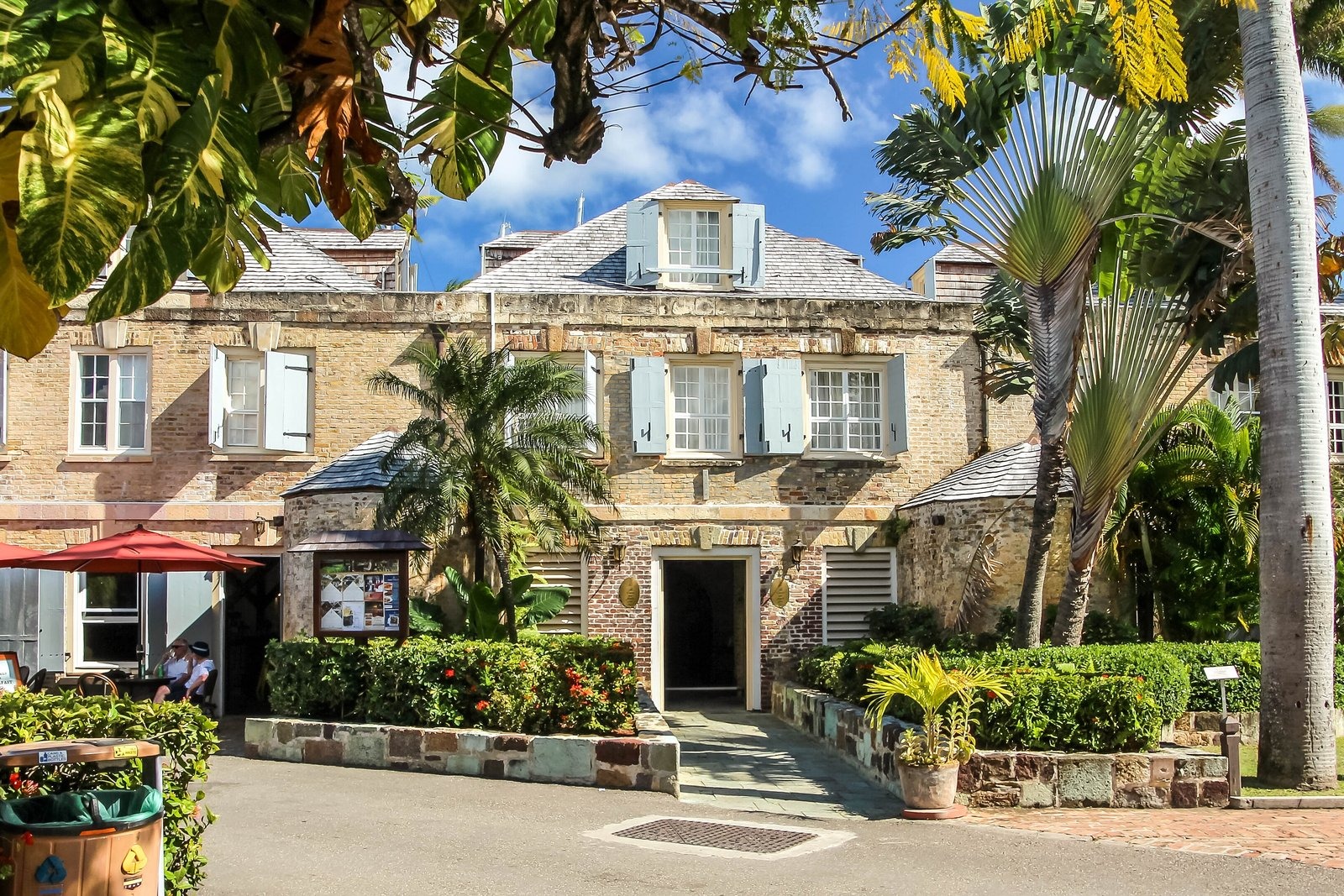
Photo: Dr. Thomas Liptak (CC BY 4.0)

English Harbour is a deep, narrow inlet whose surrounding hills sheltered ships from hurricanes. The navy first used it as a hurricane shelter in the late seventeenth century, and in 1725 the Antigua legislature assigned it to the Royal Navy. The first yard was laid out on the eastern shore, and in the 1740s the works moved across to the western side, where Nelson's Dockyard stands. Between 1773 and 1810 it grew into a major naval-support complex.

The tour has 10 stops. Down at the water you cover the Copper and Lumber Store, completed in 1789, the Admiral's Inn, the surviving boathouse pillars, the Dockyard Museum and Fort Berkeley. Clarence House stands on Clarence Hill above the yard, and the stops after it, Dow's Hill and Shirley Heights, are reached by road. The tour also says plainly that the dockyard was built and maintained by enslaved Africans. The guide plays in your browser, starts each stop by GPS and works offline once downloaded.

What you hear along the way

Dockyard Museum

Housed in the former naval officers' quarters. Nelson served here from 1784 to 1787 and wrote to his uncle that, but for the kindness of the commissioner's wife, he should almost hang himself at this infernal hole. The stop also explains why he was unpopular with local merchants.

Copper and Lumber Store

Completed in 1789, it stored lumber and copper sheeting for warship repairs while sailors slept in hammocks on the upper floors and in the attic. Its courtyard of narrow arched porticos now holds a hotel, a restaurant and a pub.

Admiral's Inn

Planned as the Pitch and Tar Store, built with bricks brought from England as ship ballast. The stop follows its later uses as a police station, a doctor's residence and, from 1960, a hotel.

Boathouse Pillars

Roughly twelve stone pillars beside the quay are what survives of the Boat House and Sail Loft of 1797: boats were brought in underneath, while sails were laid out, cut and mended in the loft above.

Fort Berkeley

First built by the Antiguan colonial government in 1704 to command the harbour entrance. An iron chain could be stretched from here to Fort Charlotte, and a 24-pound cannon made in Scotland in 1805 is still in its original position.

Clarence House

Built about 1804 to 1806 for the dockyard's Navy Commissioner. The stop corrects a legend: the Duke of Clarence, later William the Fourth, did not live here, because the house was built after his time in these waters.

Shirley Heights Lookout

A ridge about 150 metres above the sea, where a signal station used flags by day and guns at night to pass messages toward St John's through Great Fort George on Monk's Hill.

The Blockhouse

A brick ruin on a sheer Atlantic-facing cliff, about 446 feet above the sea. Its Gunpowder Magazine was stabilised in 2007 with historic masonry techniques, and Montserrat is sometimes visible on a clear day.

The 10 stops

  1. Dockyard Museum
  2. Copper and Lumber Store
  3. Admiral's Inn
  4. Boathouse Pillars
  5. Fort Berkeley
  6. Clarence House
  7. Dow's Hill Interpretation Centre
  8. Shirley Heights Lookout
  9. Officers' Quarters, Shirley Heights
  10. The Blockhouse

Before you go

Starts at
At English Harbour, where the dockyard stops sit within walking distance of each other; each stop plays as you reach it.
The route
10 stops: the dockyard buildings and Fort Berkeley are at the waterfront, Clarence House is on the hill above, and Dow's Hill and Shirley Heights are reached by road.
Good to know
The Dockyard Museum and the Dow's Hill centre's multimedia presentation can be visited when open. Fort Berkeley is reached by a footpath from the Dockyard that starts near the dinghy wharf and passes a stone quarry.
By ship
Saint John's (AG) is the port linked to this tour. See Saint John's.
How it plays
In your phone's web browser, with no app to install. GPS starts each stop as you reach it, and once downloaded the tour plays without a signal.

Questions

Did Nelson live in Nelson's Dockyard?

Nelson served at English Harbour from 1784 to 1787 as senior officer of the Northern Division of the West Indies Station, commanding HMS Boreas. He disliked the place. The yard took his name later; it reopened to the public as Nelson's Dockyard in 1961.

Did the Duke of Clarence live in Clarence House?

That is a legend. The house was built about 1804 to 1806, after Prince William Henry, later William the Fourth, had served here under Nelson in the 1780s. He stayed in an earlier house on the hill.

Is the site recognised by UNESCO?

Yes. The dockyard and its related sites were inscribed as a UNESCO World Heritage Site in 2016, and Fort Berkeley is among the defensive sites recognised.

Does the tour mention the people who built the dockyard?

Yes. The Dockyard Museum, Clarence House and Officers' Quarters stops state that enslaved Africans built and maintained the dockyard and the Shirley Heights complex.

Do I need a data connection while walking?

No. The guide plays in your phone's browser with nothing to install, each stop starts by GPS, and once you have downloaded the tour it works offline.

Nelson's Dockyard and English Harbour, Antigua

$10.99Tax included
Already bought it? Open your tour