Cape Town
South Africa · Western Cape

Cape Town from the harbour to the Castle

Fifteen stops on the history of the Cape, from Dutch fort and slave lodge to Mandela's balcony.

$10.9915 stops · one payment
Already bought it? Open your tour

Listen to one stop before you buy

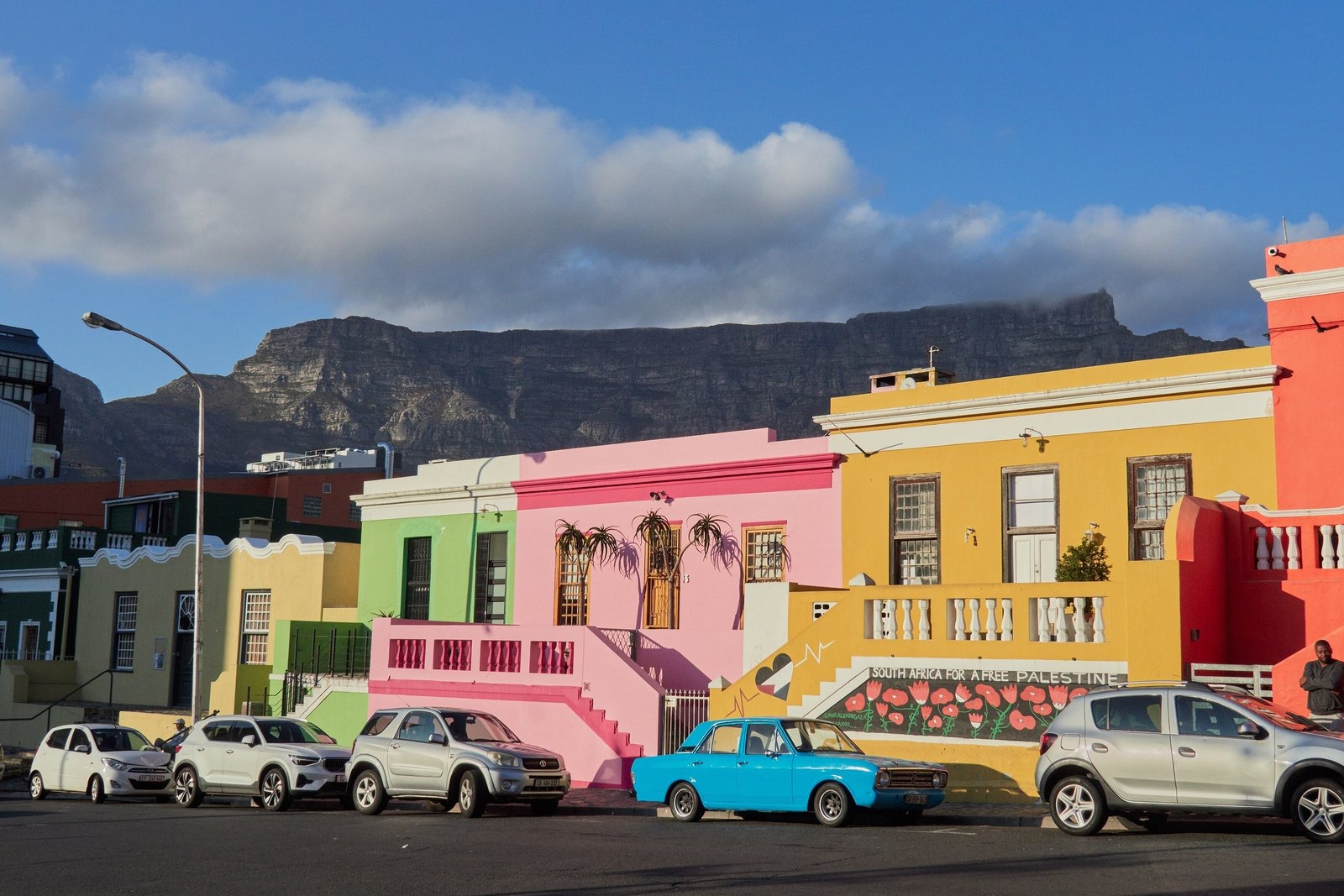
Photo: lumoplank (CC0)

Cape Town's centre packs more than three centuries of colonial and anti-apartheid history into a few blocks. The Castle of Good Hope, begun in 1666, is the oldest building in the city. The Company's Garden was planted in 1652 to feed Dutch East India Company ships. Between them stand a slave lodge, a mosque founded in 1794, three churches and the Parliament where apartheid laws were passed and later repealed.

The tour covers the old harbour, the Bo-Kaap, the Company's Garden and the civic buildings, and it treats the city's founding honestly, including the Khoekhoe land the garden was made from, the people enslaved at the Cape and the forced removals from District Six. Each stop plays as you arrive by GPS, so you can set your own pace and walk it in the order that suits you.

What you hear along the way

Clock Tower and Nelson Mandela Gateway

A red Victorian Gothic tower built in 1882 as the Port Captain's office, with a tide gauge, signal flags and an Edinburgh clock. Beside it, a glass terminal is the departure point for Robben Island, where Mandela spent eighteen of his twenty-seven years in prison.

Auwal Mosque

Founded in 1794 on Dorp Street and regarded as the oldest mosque in South Africa. Tuan Guru, a prince from Tidore exiled to the Cape, wrote out the Qur'an from memory on Robben Island and later taught children and adults here.

Company's Garden

Created in 1652 under Jan van Riebeeck to supply vegetables, fruit and water to the Company's fleets, on Khoekhoe grazing land. Today it holds oak-lined avenues, a sundial, water furrows from mountain streams and the Cape Town Labour Corps Memorial.

Slave Lodge

Approved in 1679 to house the Company's enslaved people, it later held convicts, then the Supreme Court and the Legislative Council. Since 1998 it has been the Iziko Slave Lodge Museum, with exhibitions about slavery.

Houses of Parliament

Completed in 1884 for the Cape Colony and later the national Parliament. The laws of apartheid were passed in these buildings after 1948 and repealed here; in May 1994 the first democratically elected Parliament met and elected Nelson Mandela president.

District Six Museum

In a former Methodist Mission Church. In 1966 District Six was declared a white area, around sixty thousand people were forced out and their homes bulldozed. Inside, a floor map is covered with former residents' handwritten names and memories.

City Hall and the Grand Parade

Completed in 1905 in Bath limestone and Aberdeen granite, with a 3,165-pipe organ. On 11 February 1990, hours after his release, Nelson Mandela spoke from its balcony to a crowd filling the Grand Parade; a bronze statue now stands there.

Castle of Good Hope

Built between 1666 and 1679 as a pentagonal Dutch East India Company fortress, with Khoekhoe, African and Eastern slave labourers working beside European craftsmen. Look above the gateway for the lion holding seven arrows.

The 15 stops

  1. The Clock Tower and the Nelson Mandela Gateway
  2. Chavonnes Battery
  3. Lutheran Church, Strand Street
  4. Koopmans-de Wet House
  5. Bo-Kaap Museum
  6. Auwal Mosque
  7. Greenmarket Square and the Old Town House
  8. Groote Kerk
  9. Slave Lodge
  10. St George’s Cathedral
  11. Company’s Garden
  12. Houses of Parliament
  13. District Six Museum
  14. City Hall and the Grand Parade
  15. Castle of Good Hope

Before you go

Starts at
In central Cape Town, from the old harbour to the Castle; each stop plays as you reach it, in whatever order you walk.
The route
Fifteen stops on foot through the old harbour area, the Bo-Kaap, the city centre and the Company's Garden.
Good to know
Several stops are museums, churches and historic houses, and the guide describes interiors for when they are open. The Bo-Kaap Museum stands in a living neighbourhood where residents' homes are not part of the museum.
How it plays
In your phone's web browser, with no app to install. GPS starts each stop as you reach it, and once downloaded the tour plays without a signal.

Questions

What does the Cape Town tour cover?

Fifteen stops in the city centre: the Clock Tower and Nelson Mandela Gateway, Chavonnes Battery, the Lutheran Church, Bo-Kaap Museum, Auwal Mosque, Greenmarket Square, the Slave Lodge, the Company's Garden, Parliament, the District Six Museum, City Hall and the Castle.

Does it deal with apartheid and slavery?

Yes. It covers the Slave Lodge, the Slave Code proclaimed from the Old Town House balcony, the forced removals from District Six, the apartheid laws passed in Parliament and the 1989 march led by Archbishop Desmond Tutu from St George's Cathedral to City Hall.

Where did Nelson Mandela speak after his release?

From the central balcony of City Hall, overlooking the Grand Parade, on 11 February 1990. He also addressed crowds from there in 1994. A life-size bronze statue of him now stands on the balcony.

Is the Castle of Good Hope part of the tour?

Yes. The guide covers its pentagonal design, its role as the Governor's residence and administrative centre, its later use as a prison and military headquarters, and the museum collections it houses today.

Do I need an app or mobile data?

No app is needed: the tour plays in your phone's browser and each stop starts by GPS as you arrive. After you download it for offline use, it plays without a data connection.

Can I go inside the buildings?

Many stops are museums or churches, and the guide points out what to look for inside when they are open, such as the carved lions under the Groote Kerk pulpit or the trompe-l'oeil paintings in Koopmans-de Wet House.

Cape Town — the Waterfront, Bo-Kaap, the Company's Garden and the Castle

$10.99Tax included
Already bought it? Open your tour