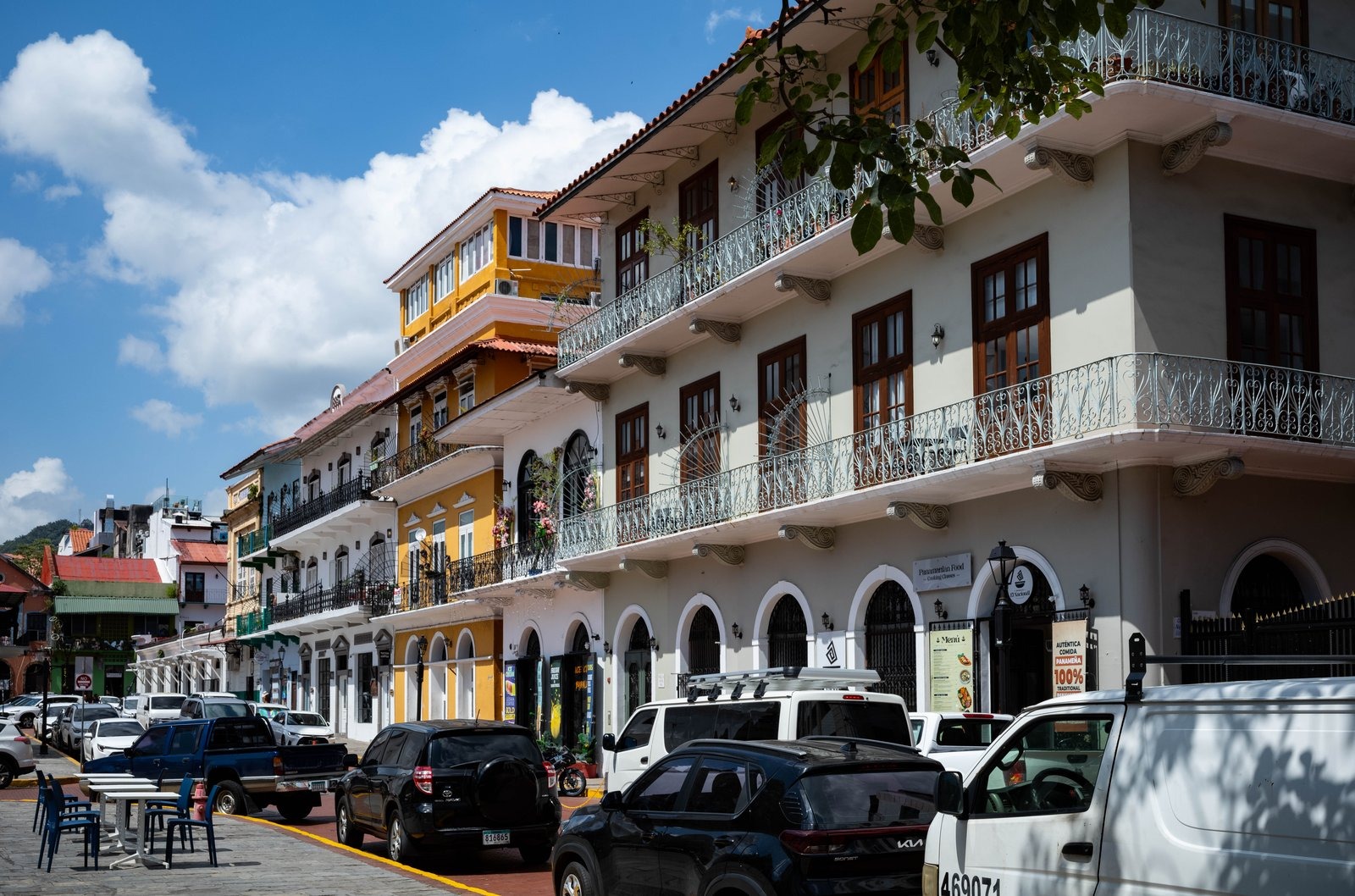
Plaza de la Independencia
The Plaza Mayor of the new city, which exists because Morgan took Old Panama in 1671. The tour sets Exquemelin's account against others, one of which says the Spanish governor had placed gunpowder and his own artillery captain set it off.
Arco Chato and the ruin of Santo Domingo
A flat arch about 50 feet long, said to have been laid without metal, survived the fires that burned the Dominican convent. It collapsed on the night of 7 November 2003 and was rebuilt with a metal beam inside. Two legends about the friar are told.
Church of San Felipe Neri
The great fire of 2 February 1737 began on this street, in a storeroom, and burned some 360 of the 380 houses inside the walls within about five hours. With the cathedral lost, this oratory served in its place.
Church of La Merced
Its stone front was carved for the first city's Mercedarian church and carried here around 1680, the only facade in the district from the first city. The church and convent were spared in both 1737 and 1756.
Plaza Bolívar and the Palacio Bolívar
The Congress of Panama met here from 22 June to 15 July 1826 and produced a union treaty only Gran Colombia ratified. The former Franciscan convent now houses the Foreign Ministry, with a Salón Bolívar tied by tradition to that congress.
Municipal Palace Demetrio H. Brid
An open cabildo declared independence from Spain here on 28 November 1821. The present palace, inaugurated on 1 June 1910, is named for the council president who presided on 3 November 1903, when Panama proclaimed its separation from Colombia.
Panama Canal Museum and Plaza de Francia
The museum sits in the former Grand Hotel, bought by the French canal company in 1881. The tour covers the treaty signed on 18 November 1903, and Plaza de Francia remembers about 22,000 people who died building the French canal.
Las Bóvedas, Old Seawall and Paseo Esteban Huertas
The surviving defences and the vaults that served as barracks and prison. The walkway above commemorates General Esteban Huertas, who arrested the Colombian generals on 3 November 1903. The land wall came down under a law of 11 October 1856.