Nassau
Bahamas · New Providence

Nassau's history, stop by stop

Pirates, Loyalists, a slave auction hall and a 1942 riot, explained where each of them left its mark.

$10.9914 stops · one payment
Already bought it? Open your tour

Listen to one stop before you buy

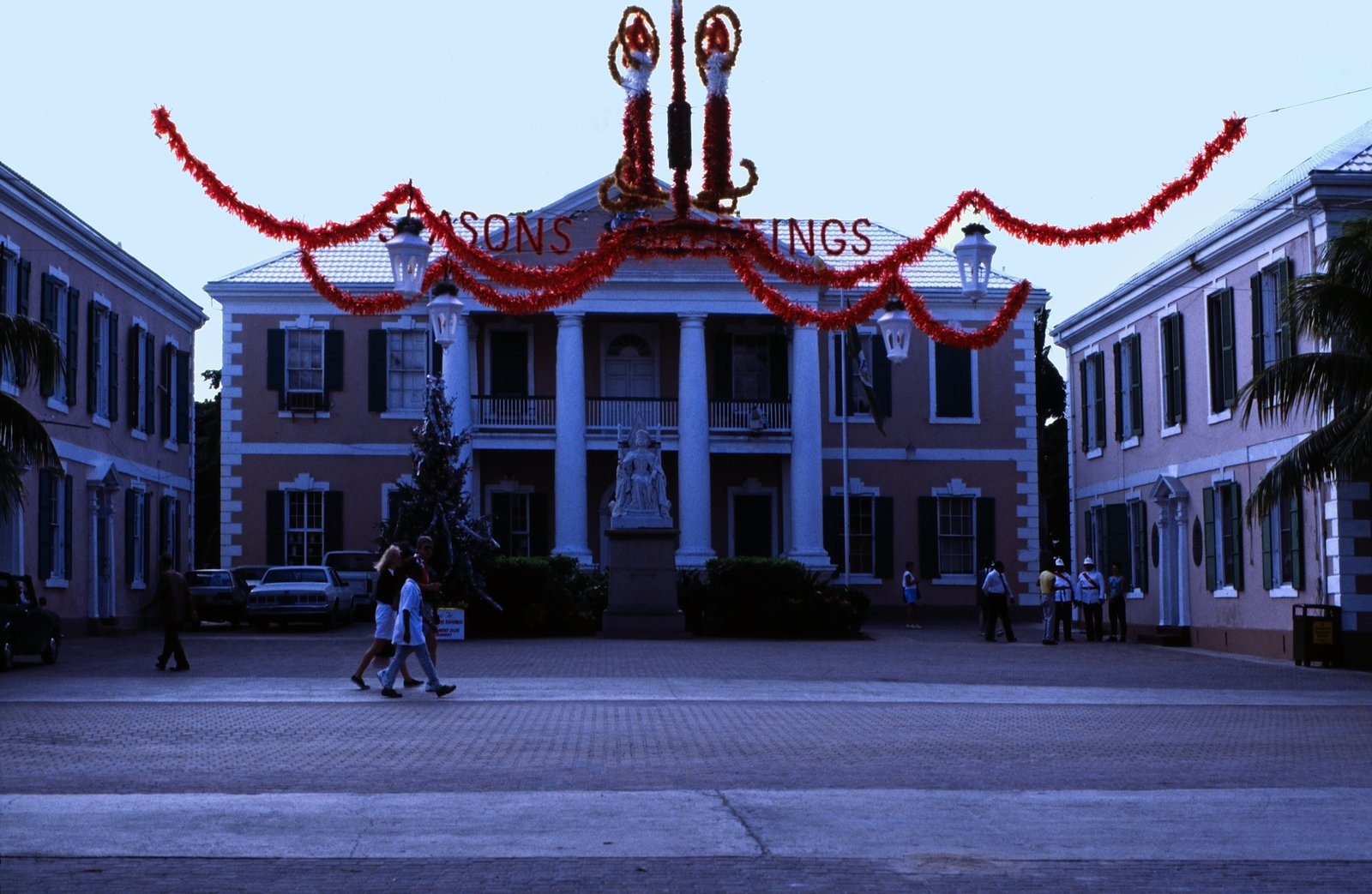
Photo: Rüdiger Stehn from Kiel, Deutschland (CC BY-SA 2.0)

Nassau began as Charles Town in 1670, was burned in 1684 and rebuilt in 1695 under a new name. From 1703 to 1718 it had no legitimate governor and became a pirate base, until Woodes Rogers arrived with the King's pardon. The tour follows the town from there: Loyalists after the American War, the enslaved who built the Queen's Staircase, and the 1830 defiance led by Pompey that gave a museum and a square their names.

Fourteen stops cover the forts on the ridges, the squares around Bay Street, a cathedral, an octagonal gaol turned library, and galleries and museums. Some familiar stories get corrected. The Queen's Staircase does not have a step for every year of Victoria's reign, and the tour explains why not.

What you hear along the way

Queen's Staircase

Steps cut from solid rock in 1793 and 1794 by enslaved people. It is called the sixty-six steps, but only sixty-five show. The popular claim that they match Victoria's years on the throne is wrong: she reigned a little under sixty-four years.

Fort Fincastle

Shaped like a paddle-wheel steamer, built around 1793 by Lord Dunmore on Bennet's Hill. It was a lighthouse until 1817, then a signal station, and the stop spells out the flag code: red and yellow bars for a steamer, a red pennant for a warship.

Fort Charlotte

The largest of Nassau's forts, with a dry moat and dungeons, built in the late 1780s. No battle was ever fought there. In 1888 a magistrate judged that none of the three forts was of the slightest use except to an artist.

Vendue House and Pompey Museum

Cattle, goods and enslaved Africans were auctioned in this hall. It reopened in 1992 as the Pompey Museum of Slavery and Emancipation. Pompey led forty-four people from Lord Rolle's Exuma estates to Nassau in 1830 to appeal to the governor.

Pirates of Nassau Museum

A wax museum on the pirate decades. The stop gives the dates: the pardon proclaimed on 5 September 1717, Rogers's arrival in July 1718, and the trial of ten men on 9 December 1718, of whom eight were hanged.

Government House

The twelve-foot Columbus statue at the entrance leads into the fate of the Lucayans, gone within a generation of 1492. The house itself dates from 1803 to 1806, was wrecked by the 1929 hurricane and has had its columned front since 1932.

Parliament Square

The General Assembly first met in 1729. On 1 June 1942 airfield workers paid four shillings a day marched into the square, and the protest became a riot in which five Bahamians died and 114 people were arrested.

Nassau Public Library and Museum

The only octagonal historic building in the Bahamas, put up between 1798 and 1800 as the first gaol and workhouse. The 1888 magistrate said the old gaol made a good library, while the new prison was generally three parts empty.

The 14 stops

  1. Pompey Museum of Slavery and Emancipation
  2. Vendue House
  3. Fort Fincastle
  4. Government House
  5. Pirates of Nassau Museum
  6. Parliament Square
  7. Fort Charlotte
  8. Queen's Staircase
  9. Christ Church Cathedral
  10. Pompey Square
  11. Nassau Public Library & Museum
  12. Heritage Museum
  13. National Art Gallery of The Bahamas (NAGB)
  14. Rawson Square

Before you go

Starts at
In central Nassau around Bay Street and the squares; each stop plays as you reach it, in whatever order you walk.
The route
14 stops on foot between the harbourfront squares, the ridge forts and the streets below Government House, with the Queen's Staircase connecting Fort Fincastle to the town.
Good to know
Fort Fincastle and Fort Charlotte sit on ridges above the town, so expect hills and steps. The Queen's Staircase is the stone path between Fort Fincastle and the town below.
By ship
Nassau (BS) is the port linked to this tour. See Nassau.
How it plays
In your phone's web browser, with no app to install. GPS starts each stop as you reach it, and once downloaded the tour plays without a signal.

Questions

Who was Pompey?

An enslaved man from Steventon on Exuma, then about thirty-two, who refused to be moved from Exuma to Cat Island in 1830. He is probably the best known name in Bahamian slave revolts, and in October 2025 he was named a National Hero of The Bahamas.

Does it cover the pirates?

Yes. The Pirates of Nassau Museum stop gives the timeline from the pirate base years of 1703 to 1718 through Woodes Rogers, who died in Nassau in 1732. It also names Charles Vane, who refused the pardon and escaped in a small sloop.

Are the museums part of the route?

Several are stops: the Pompey Museum in Vendue House, the Pirates of Nassau Museum, the Heritage Museum on West Hill Street, the Nassau Public Library and Museum, and the National Art Gallery in Villa Doyle.

Does the Queen's Staircase really have sixty-six steps?

It is called that, but only sixty-five show, because the bottom step lies under the paving. It climbs about 102 feet, around 31 metres. The tour also explains why the name is not linked to Victoria's reign.

Is it only about colonial history?

It runs from the Lucayans, who settled the islands from around AD 600, to the Bahamas becoming independent on 10 July 1973. The National Art Gallery stop covers the independence-era museum plan.

How does the GPS audio work?

It plays in your phone's browser, with no app to install. Each stop starts by GPS when you arrive, and after you download the tour it works offline.

Nassau

$10.99Tax included
Already bought it? Open your tour