Prambanan Temple Compounds
Indonesia · Yogyakarta

Prambanan: from the Shiva temple to Sewu

Thirteen stops through a ninth-century Hindu complex and the Buddhist mandala a kilometre to its north.

$10.9913 stops · one payment
Already bought it? Open your tour

Listen to one stop before you buy

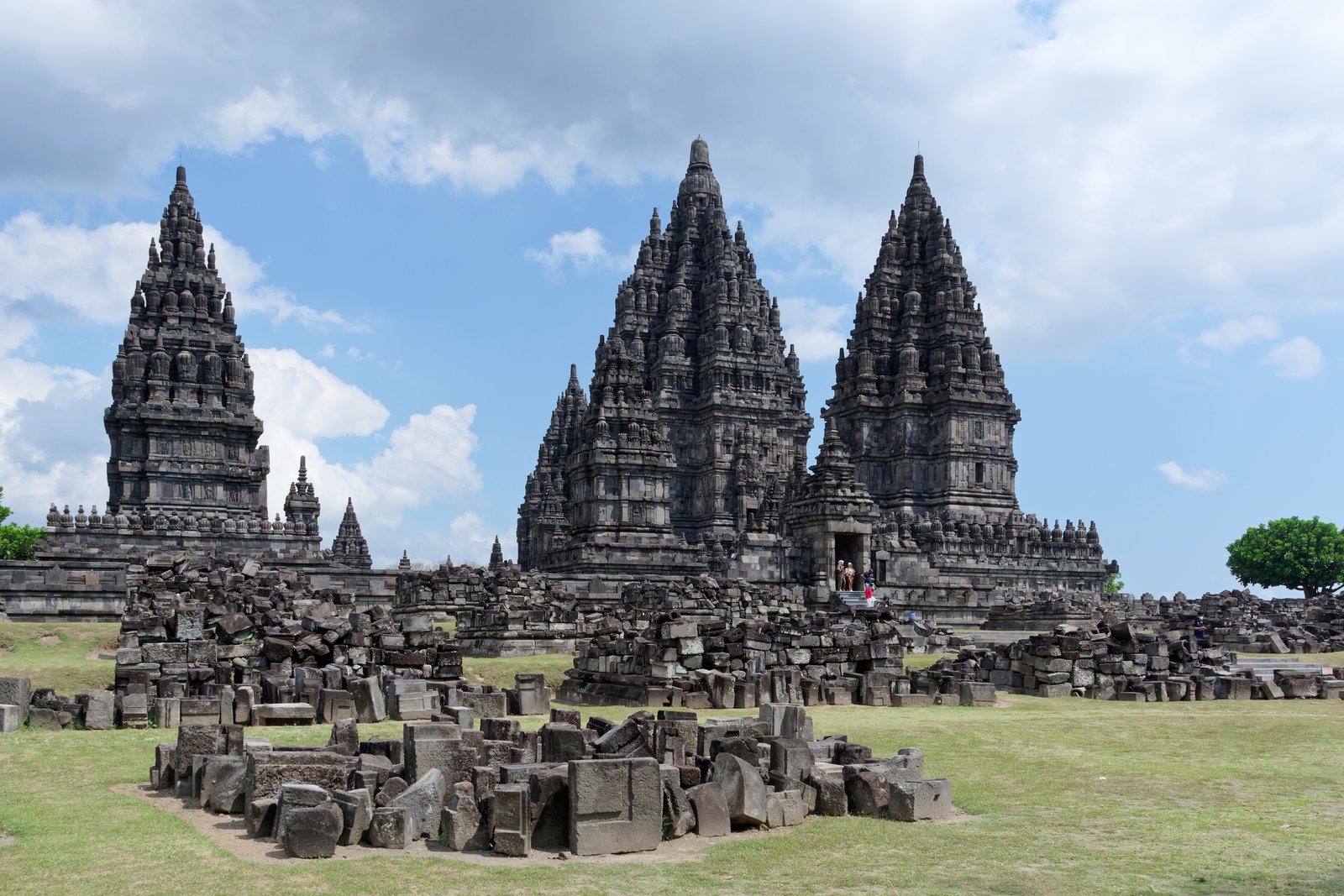
Photo: Jakub Hałun (CC BY-SA 4.0)

Prambanan was built by the Hindu kings of Mataram in the middle of the ninth century, a period associated with Rakai Pikatan, and an inscription of 856 records the consecration of a Shiva temple compound. It was used for about a century, then abandoned as power shifted east in Java. Earthquakes, eruptions and neglect buried it under vegetation and volcanic debris, and Javanese legends kept telling of it. UNESCO inscribed it in 1991.

The tour starts at the east gate and runs north through the park to Candi Sewu, about a kilometre away. In the central court you see the three temples to Shiva, Brahma and Vishnu and the smaller vehicle temples facing them, then the Durga statue the legend calls Rara Jonggrang. Candi Lumbung and Candi Bubrah lead on to Sewu, a Buddhist complex with eight kneeling guardians. Each stop plays by GPS as you reach it.

What you hear along the way

The east gate and the perwara shrines

The principal entrance, with four concentric rows of ancillary shrines beyond it that once numbered 224. The guide traces the site's story from the 1733 report of the ruins, through clearing in 1805 and reconstruction beginning in 1918, to the UNESCO listing.

The Shiva temple

The tallest structure, its tower rises about forty-seven metres on a base about thirty-four metres a side. Reconstruction began in 1918 and was completed in 1953. The Ramayana reliefs run around its inner balustrade, read clockwise from the eastern stairs.

The Durga chamber (Rara Jonggrang)

In the north chamber stands a four-armed Durga slaying a buffalo demon. Local tradition calls her the princess Rara Jonggrang, turned to stone by Bandung Bondowoso after she tricked him over a thousand temples. The guide stresses the statue was carved as Durga, not as a portrait.

The Brahma and Vishnu temples

Brahma's single chamber holds a four-headed statue, and the Ramayana sequence ends on its inner gallery. The Vishnu temple, rebuilt between 1982 and 1991, carries reliefs of the Krishnayana, the story of Krishna, read left to right.

The Nandi, Angsa and Garuda temples

The vehicle temples stand before the three principal temples. The Nandi temple still holds the kneeling bull with Surya and Chandra on chariots. The Angsa and Garuda temples are empty inside, with no statue remaining.

The apit temples

The two flanking temples sit between the main rows. Their interiors are empty, but reliefs of a female deity on the southern one led historians to propose dedications to Sarasvati and Lakshmi. No inscription confirms it.

Candi Lumbung and Candi Bubrah

Lumbung has a central shrine surrounded by sixteen smaller temples, with weathered bodhisattva figures and empty niches. Bubrah lies about 300 metres south of Sewu, with the Five Wisdom Buddhas in its exterior niches.

Candi Sewu

The name means a thousand temples, though the complex holds 249 buildings in a mandala. An inscription dated 792 gives its original name, Manjusrigrha, and eight kneeling, mace-holding Dwarapala giants guard its four gateways.

The 13 stops

  1. The east gate and the perwara shrines
  2. The Angsa temple
  3. The Brahma temple
  4. The Nandi temple
  5. The Shiva temple
  6. The Durga chamber (Rara Jonggrang)
  7. The Vishnu temple
  8. The Garuda temple
  9. The apit temples
  10. Candi Lumbung
  11. Candi Bubrah
  12. The Dwarapala guardians of Sewu
  13. The main temple of Sewu

Before you go

Starts at
At the east gate, the principal entrance to the Prambanan temple complex; the walk runs north through the park to Candi Sewu, about a kilometre away.
The route
Thirteen stops on foot, first through the central court of the Hindu temples, then north along a path to Lumbung, Bubrah and Sewu.
Good to know
The temples are walked clockwise to follow the reliefs. The Angsa, Garuda and apit temples are empty inside, and earthquakes have damaged the complex, including in 2006.
How it plays
In your phone's web browser, with no app to install. GPS starts each stop as you reach it, and once downloaded the tour plays without a signal.

Questions

Where does the Prambanan tour begin?

At the east gate, the main entrance. The walk then runs north through the park to Candi Sewu, about a kilometre away, so the thirteen stops cover both the Hindu temples and the Buddhist ones.

What is the Rara Jonggrang legend?

Prince Bandung Bondowoso was building a thousand temples to win Rara Jonggrang, who tricked him into believing dawn had come before he finished. In anger he turned her to stone. Tradition links her with the Durga statue and the unfinished temples with Sewu.

Which way do I walk around the temples?

Clockwise, with the temple on your right. The guide says this follows the Ramayana relief sequence from the Shiva temple to the Brahma temple, and the Krishnayana panels at the Vishnu temple read left to right.

Are the temples original?

They are reconstructions from original stone blocks, a method called anastylosis, permitted when at least 75 percent of a shrine's masonry is available. Many of the 224 perwara shrines survive only as foundations and numbered stone piles.

Is Sewu Hindu too?

No. Candi Sewu is Buddhist, built in the ninth-century Mataram period as a mandala, with a central temple and ring of smaller ones. Lumbung and Bubrah are Buddhist too.

How does the tour play?

In your phone's browser, with no app to install. Each stop starts by GPS as you reach it, and once downloaded it works without a data connection.

Prambanan — the Temples of Shiva, Brahma and Vishnu, and Candi Sewu

$10.99Tax included
Already bought it? Open your tour