Teotihuacan
Mexico · State of Mexico

Walking the Avenue of the Dead

Pyramids, palaces and apartment compounds explained one stop at a time, with the unresolved questions left open.

$10.9913 stops · one payment
Already bought it? Open your tour

Listen to one stop before you buy

Photo: Daniel Case (CC BY-SA 3.0)

The name Avenue of the Dead is not the city's own. The Mexica, arriving centuries after the city fell, called it Miccaotli, the Road of the Dead, because they took the mounds beside it for tombs. This tour starts from that mistake and works through what excavation has since shown: temples built over older temples, tunnels beneath the Pyramid of the Sun and the Feathered Serpent temple, and a city planned around a river it redirected.

Thirteen stops cover the Ciudadela, both great pyramids, the Plaza of the Moon, the Palace of Quetzalpapálotl, and the mural compounds of Tepantitla and Tetitla, plus two museums. The tour is candid where the evidence stops: the dedication of the Pyramid of the Sun is called unresolved, and the purpose of the tunnel beneath the Plaza of the Moon is described as uncertain.

What you hear along the way

Temple of the Feathered Serpent

Built around 200 CE and consecrated with the burials of some two hundred people. A later platform hides much of its west face, but the carved serpent heads alternating with a goggle-eyed rain deity survive, along with traces of red, green, yellow and black paint.

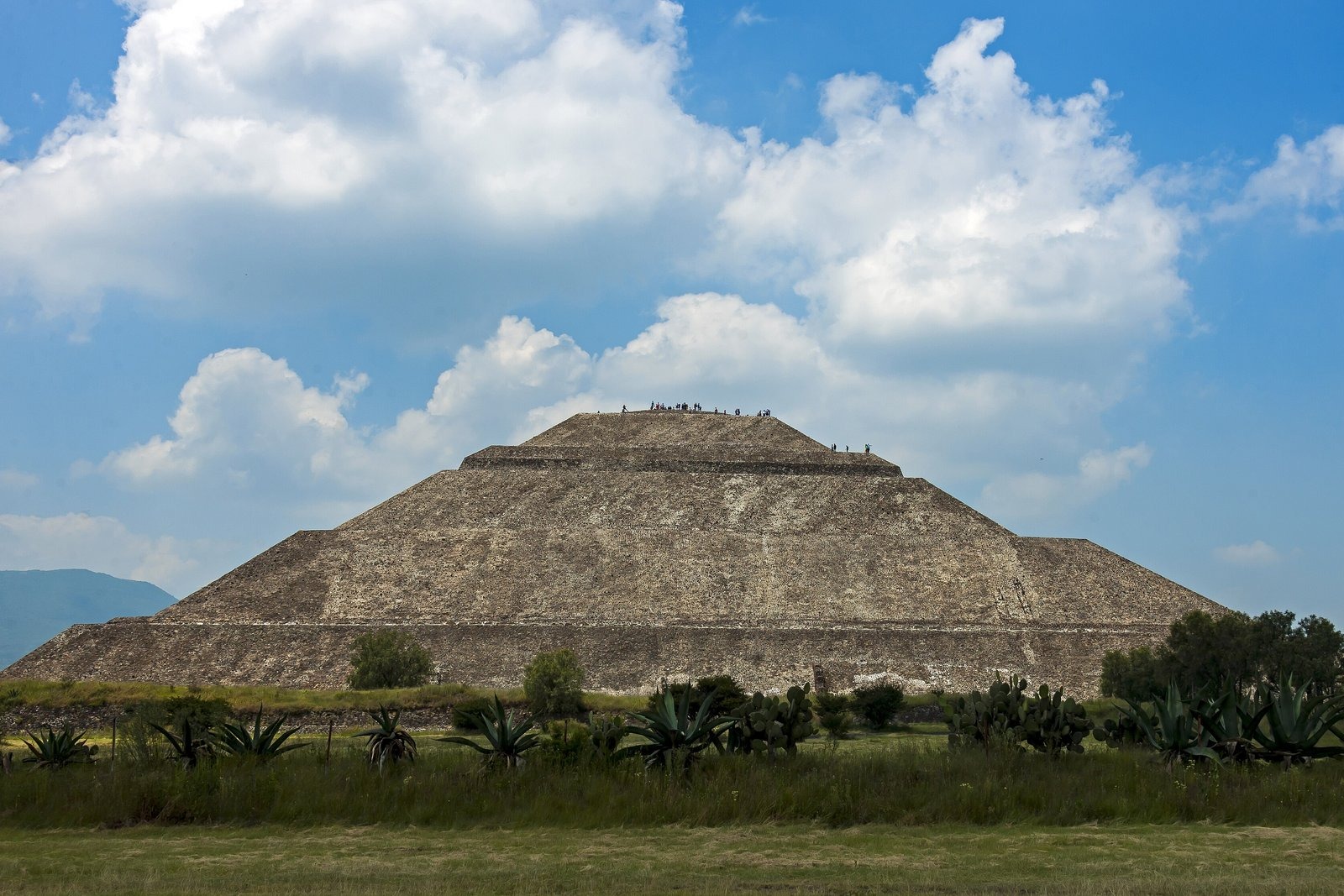
Pyramid of the Sun

About sixty-five metres high and over 1,175,000 cubic metres of earth and stone. A tunnel found in 1971 runs beneath it. Leopoldo Batres rebuilt a fifth tier between 1905 and 1910, and the tour explains what that restoration changed.

Pyramid of the Moon

Its present form comes from at least seven successive enlargements, each one enclosing the earlier building. Dedicatory burials were placed inside. Standing in the plaza, the mountain Cerro Gordo seems to merge with the pyramid.

Palacio de Quetzalpapálotl

Carved columns around the courtyard show quetzal-like birds combined with butterflies, and some birds still have obsidian disks for eyes. Older buildings lie underneath, including the Palace of the Jaguars and the Temple of the Feathered Conch Shells.

Tepantitla

An apartment compound outside the ring road, with about 100 square metres of mural surface and roughly 30 percent of the original painting preserved. Its Tlalocan mural shows a curious-looking central figure above tiny people swimming, singing and picking flowers.

Tetitla

High walls, narrow entrances and no windows kept the street out of this household. Inside, porticoed patios gather rainwater and murals cover the rooms. The walls were raised several metres to carry a protective roof.

Mural del Puma

A profile feline with four claws on each paw, set against dark red and framed by green rings identified as chalchihuites. It is painted on a platform beside the avenue, so travellers along the street would have seen it.

Museums: Site Museum and Beatriz de la Fuente Mural Museum

The Site Museum, by Pedro Ramírez Vázquez, is semi-subterranean so it reads as an unexplored mound. The mural museum, finished in 2001, shows fragments, reconstructs Portico 25 from Tetitla and has a room for the scholar it is named after.

The 13 stops

  1. La Ciudadela
  2. Temple of the Feathered Serpent
  3. Avenue of the Dead
  4. Superimposed Buildings
  5. Teotihuacan Site Museum
  6. Pyramid of the Sun
  7. Tepantitla
  8. Mural del Puma
  9. Plaza of the Moon
  10. Pyramid of the Moon
  11. Palacio de Quetzalpapálotl
  12. Beatriz de la Fuente Mural Museum
  13. Tetitla

Before you go

Starts at
Inside the archaeological zone along the Avenue of the Dead; each stop plays as you reach it, in whatever order you walk.
The route
13 stops on foot: the Ciudadela at the south, the avenue and the two great pyramids, the Plaza of the Moon, and the apartment compounds of Tepantitla and Tetitla, which lie away from the main axis.
Good to know
Tepantitla sits outside the ring road, east of the Pyramid of the Sun, and Tetitla about 500 metres west of the avenue, so both mean leaving the central axis. The Beatriz de la Fuente Mural Museum is entered through Gate 3.
How it plays
In your phone's web browser, with no app to install. GPS starts each stop as you reach it, and once downloaded the tour plays without a signal.

Questions

Why is it called the Avenue of the Dead?

The name came from the Mexica, who found the abandoned city centuries after it fell and assumed the mounds along the road were tombs. They called it Miccaotli. The tour stresses that the name is not the city's own.

Who built the Pyramid of the Sun?

The tour sticks to what is known. The pyramid was finished around 200 CE, but its original dedication is called unresolved. A sun dedication comes from a later Mexica name, and a rain deity has also been proposed, neither proven.

Are the murals covered?

Yes, in four stops. The Mural del Puma stands beside the avenue, Tepantitla has the Tlalocan mural, Tetitla has painted rooms under a protective roof, and the Beatriz de la Fuente museum explains materials, techniques and conservation.

What happened to the city?

Around 550 CE, or somewhat later, major civic buildings along the avenue show signs of burning and deliberate destruction. The damage was concentrated in central and elite-linked structures rather than spread evenly across the city.

Do I need a data connection while walking?

Only to download it first. The guide runs in your phone's browser with no app, each stop starts by GPS as you arrive, and the downloaded tour plays offline.

Does it include the Ciudadela?

Yes. The enclosure has four platforms, each about 400 metres long, around a plaza that could have held as many as 100,000 people according to scholarly interpretation. The Temple of the Feathered Serpent is covered as a separate stop.

Teotihuacan — the Avenue of the Dead and the Pyramids

$10.99Tax included
Already bought it? Open your tour

More in Mexico: Ruta Puuc — Kabah, Sayil, Xlapak and Labná