Rif Fort
Built in the late 1820s with 56 cannons and a bombproof room for the chain that closed the bay. Before the fort existed, Tula was publicly tortured and executed on this shore on 3 October 1795, after leading a revolt of enslaved people that began on 17 August.
Queen Emma Bridge
A floating pontoon bridge opened in 1888, rebuilt in 2005 and 2006 and mostly wood. Cars stopped using it in 1974. It swings sideways for ships, and free small ferries carry pedestrians across the water while it is open.
Mikvé Israel-Emanuel Synagogue
Consecrated in 1732 and in use since, it is the oldest surviving synagogue in the Americas. The interior copies the Portuguese synagogue in Amsterdam, and the floor is white sand. Two traditions explain why, and the tour gives both.
Museum Kura Hulanda
Six restored buildings near the quay where slave ships arrived, with exhibits on the Transatlantic Slave Trade and West African kingdoms. Slavery on Curaçao ended on 1 July 1863, and the Dutch state compensated the owners, not the enslaved.
Fort Amsterdam
Begun in 1634 or 1635 under Johannes van Walbeeck and built from coral stone by Dutch soldiers and enslaved people from Angola. A cannonball from the British attack of January 1804, led ashore by William Bligh, is still lodged in the church wall.
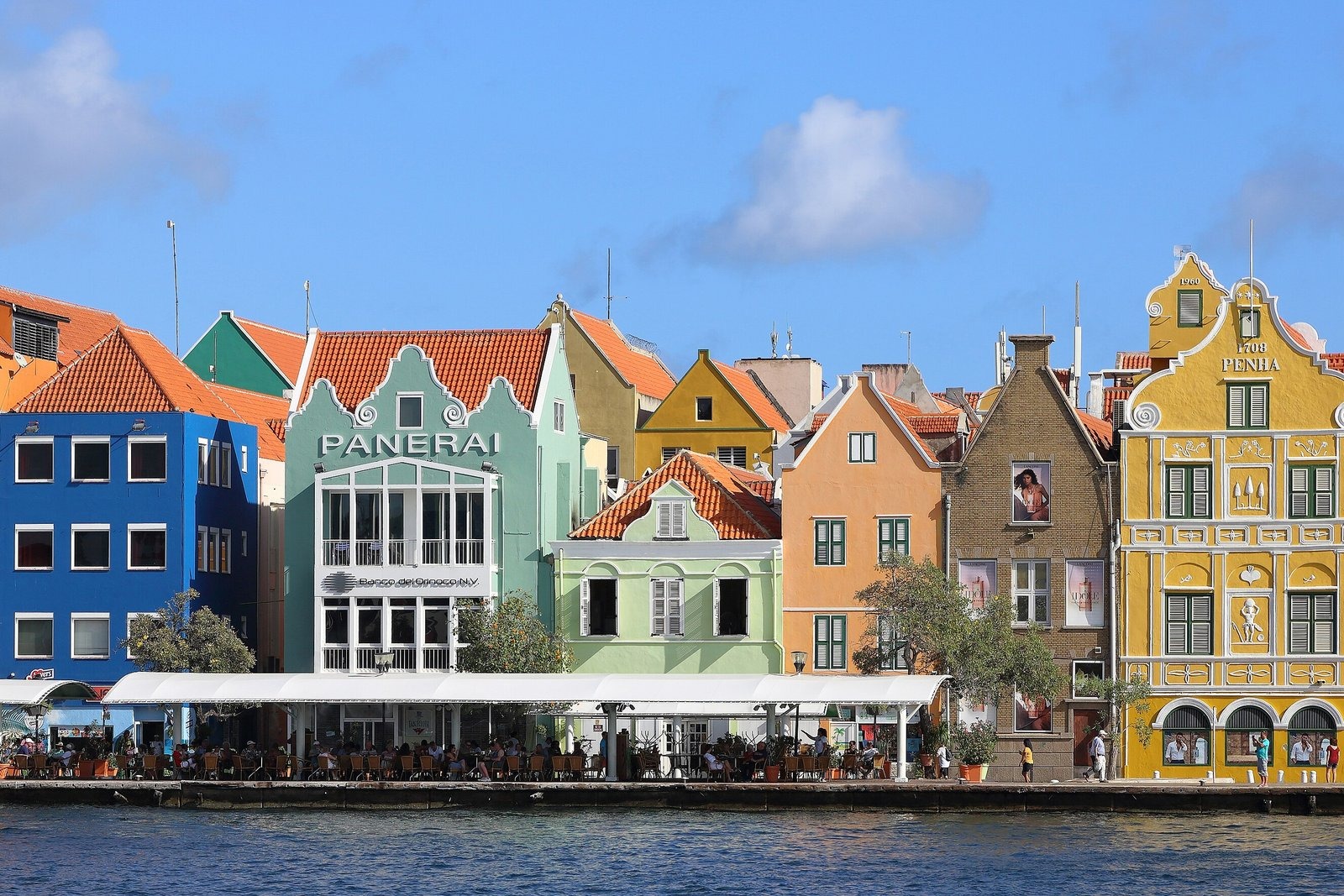
Penha Building and the Handelskade
Built of Dutch bricks said to have come as ballast in company ships. Both gable tops carry the date 1708. The curved gables and plaster ornament are described as Curaçao's own baroque, not simply Dutch.
Plasa Wilson 'Papa' Godett
The site of the annual commemoration of 30 May 1969. Refinery subcontract workers earned about half what Shell paid its own staff, a march turned to rioting, two strikers were shot dead and 322 people were arrested.
Scharloo and Pietermaai
Scharloo's Scharlooweg has villas built by wealthy Jewish merchants, including the green rococo Bolo di Batrei, constructed in 1916 and 1917. Pietermaai, east of Punda, housed shipmasters, traders and, after 1816, senior Dutch administrators.