The Causeway and the Pilgrims' Way
A metalled road laid across the tidal sands in 1954, with the older Pilgrims' Way beside it, marked by poles and two raised refuge platforms. The guide says the tide covers the causeway twice a day and tells you to check the published crossing times.
Lindisfarne Priory Museum
Holds Anglo-Saxon name stones and the carved Domesday Stone, which shows armed men on one face and the Day of Judgement on the other. The guide notes it is an interpretation that the warriors are Vikings.
Lindisfarne Priory
None of the standing ruins is Anglo-Saxon: the red sandstone priory was built by Durham's Norman monks and finished by about 1150. Look for the Rainbow Arch, a single rib of the vault that once carried the central tower.
St Cuthbert's Island
A knot of dark dolerite cut off by the tide twice a day, traditionally the place of Cuthbert's first retreat. A large wooden cross stands in the middle, and the guide warns that the tide comes in quickly.
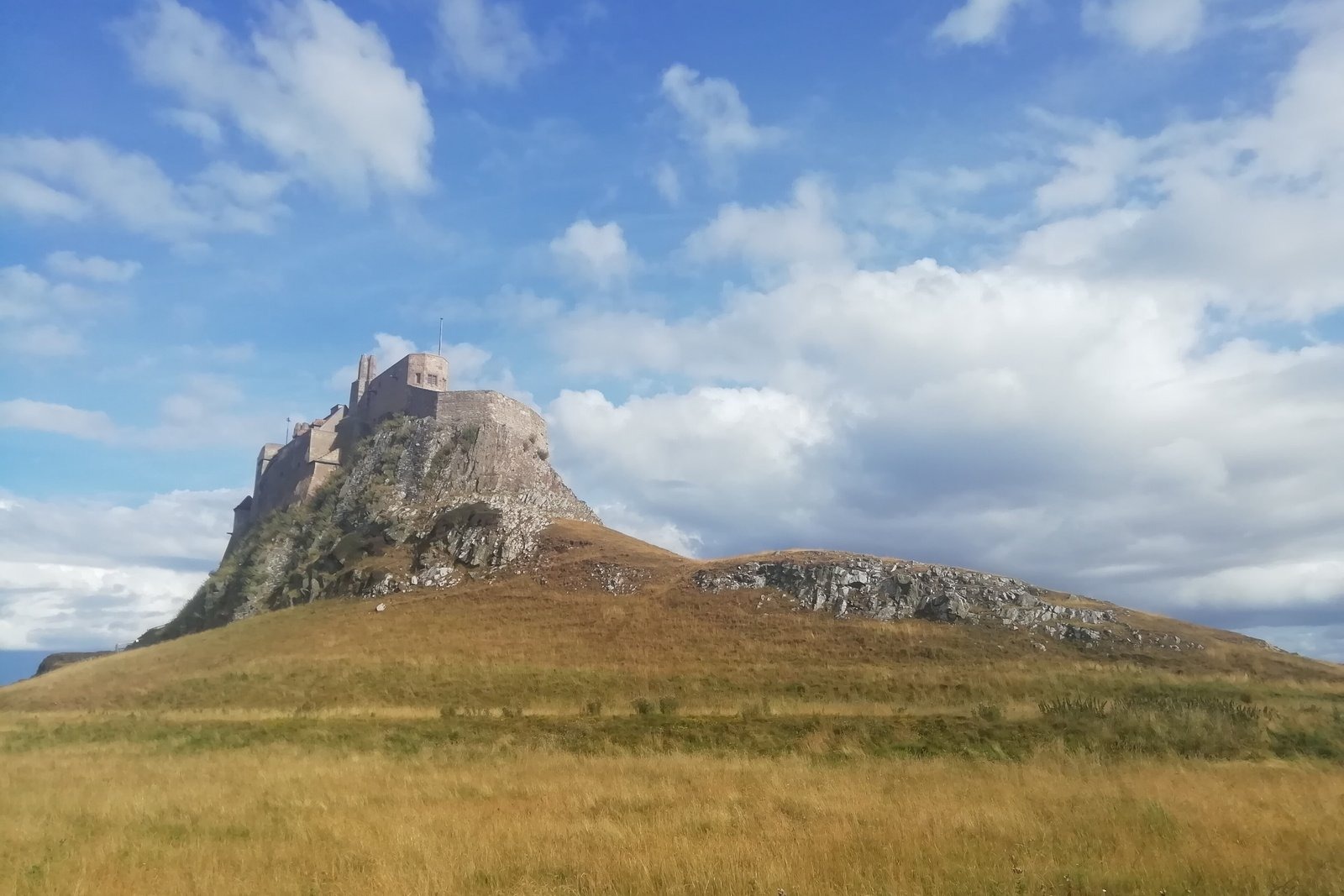
Lindisfarne Castle
A Tudor fort built on Beblowe Crag between 1565 and 1571, partly with stone from the dissolved priory. In 1901 Edward Hudson had Edwin Lutyens turn it into a holiday home, and it has been in National Trust care since 1944.
Gertrude Jekyll's Garden
A walled garden of ten-foot rubble walls on the former soldiers' vegetable patch, designed by Jekyll for Hudson in 1911 and planted to peak in July and August. The walls ramp down on the south side to keep the castle in view.
The Lime Kilns
Commissioned in 1860 by William Nicoll, a lime merchant from Dundee. Limestone came by waggonway from Nessend Quarry and coal came by sea to jetties at Castle Point, and the lime was shipped out the same way.
Emmanuel Head daymark
A white pyramid with no light, built to be seen by day and usually dated to 1810, which stopped sailors mistaking the headland for the harbour entrance. The guide calls the 'oldest daymark in Britain' claim widely repeated, not established.