The Cabildo
In the upstairs chamber on 30 November 1803 Spain handed Louisiana to France, and on 20 December France handed it to the United States. The same building later housed the Louisiana Supreme Court, which ruled against Homer Plessy in 1892.

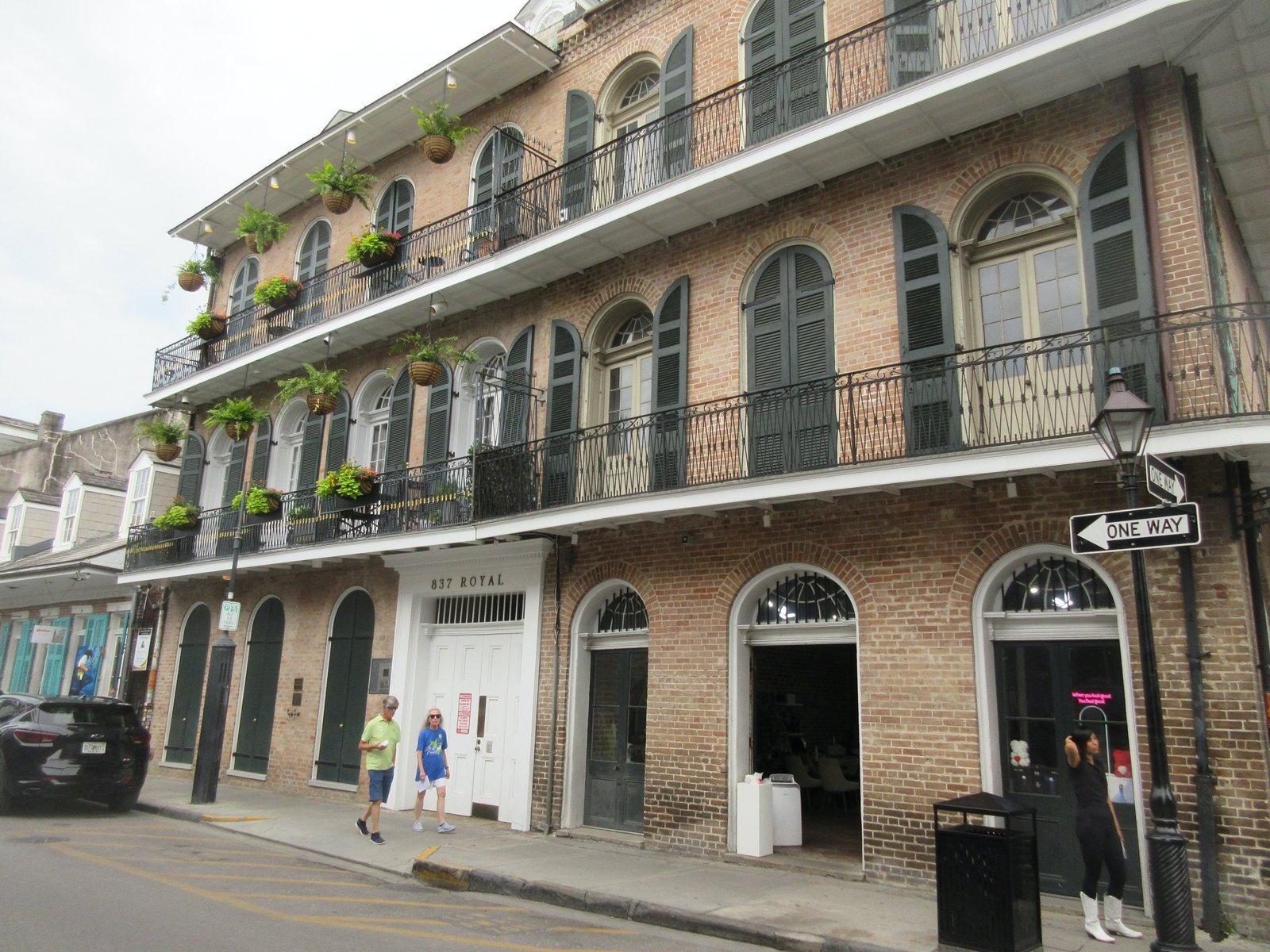
Twenty-five stops covering the Spanish and French buildings, the jazz rooms, and the stories of slavery and freedom behind them.
Listen to one stop before you buy
Photo: Infrogmation (CC BY-SA 4.0)
The Place d'Armes was laid out by French engineers in August 1721, and most of what surrounds it was rebuilt by the Spanish after the fires of 1788 and 1794. This walk reads the Quarter through its records: building contracts, notarial acts, archaeology and the court cases decided here.
It has 25 stops. Around Jackson Square are the cathedral, the Cabildo where Louisiana changed hands in 1803, and the Presbytère. Further out are Preservation Hall, the Old Ursuline Convent and the French Market, then Congo Square, Louis Armstrong Park and the oldest African American parish in the United States. Several stops, including the Hermann-Grima House and the Pontalba buildings, set out plainly how slavery paid for and ran these houses.
In the upstairs chamber on 30 November 1803 Spain handed Louisiana to France, and on 20 December France handed it to the United States. The same building later housed the Louisiana Supreme Court, which ruled against Homer Plessy in 1892.
The history of the Sunday gatherings of enslaved people, the 1817 ordinance that confined their dancing to this square, the instruments and dances, and the 2011 restoration of the name. Every surviving eyewitness account, the guide notes, was written by a white observer.
A gallery where the art dealer Larry Borenstein invited older jazz musicians to hold rehearsal sessions in the 1950s. In 1961 they became Preservation Hall under Allan Jaffe, with no air-conditioning, cushions on the floor, and a request for "When the Saints Go Marching In" costing five dollars.
The brick-between-posts cottage probably dates from the 1770s. The audio shows what the notarial records say about it, why the smugglers' smithy story is legend, and when the name was actually taken.
Considered the oldest standing building in the Mississippi Valley. It covers the Ursulines' arrival in 1727, their hospital and school, and what archaeologists found in 2011, including pottery likely made by Native girls and women at the convent.
A Federal house of 1831 built with, in all likelihood, the labour of enslaved bricklayers. The stop names people from the records, among them Oliver, Mary, Maria and her son James, and explains the museum's count of at least sixty enslaved people.
Founded in 1841 by free people of color, with the "War of the Pews" in 1842 and the pledge by Henriette Delille that began the Sisters of the Holy Family. The Tomb of the Unknown Slave stands beside it, dedicated on 30 October 2004.
Opened in 1789, the oldest cemetery in New Orleans still in existence. You learn how the plastered brick tombs were reused, what the wall vaults called fours were, and who is buried here, including Homer Plessy and Marie Laveau.
Because the records tie it to the buildings. The Hermann-Grima House, the Pontalba blocks, the 1850 House, Congo Square, St. Augustine Church and the Tomb of the Unknown Slave each have stories that cannot be told without it. The audio uses names and documents wherever they survive.
Yes. It is named for the French royal House of Bourbon, not for whiskey, and was laid out by Adrien de Pauger in 1721. The stop covers how Storyville's closure in 1917 and later decades pushed entertainment onto the street.
Yes, at several stops: Preservation Hall, the New Orleans Jazz Museum in the Old U.S. Mint, Louis Armstrong Park with its musicians' sculptures, and Congo Square, where many scholars hold that the gatherings helped give rise to jazz.
St. Louis Cathedral, the Cabildo, the Presbytère, Madame John's Legacy and the Historic New Orleans Collection's Merieult House each describe what burned, what survived and who rebuilt, many through Andrés Almonester y Roxas.
Not once the tour is downloaded. It plays in the phone browser, with no app, and each stop starts by GPS as you arrive.
More in United States: Portland, Maine · St Augustine