Castillo de San José
Built from 1776 to 1779 to defend the port and to give islanders work after the volcanic devastation. The work it gave the hungry earned it the name Fortaleza del Hambre. César Manrique converted it into the MIAC museum, opened in 1976.
Castillo de San Gabriel
A timber fort of the 1570s that the corsair Morato Arráez burned in 1586. The stone reconstruction of 1666 stands on an islet reached by the Puente de las Bolas.
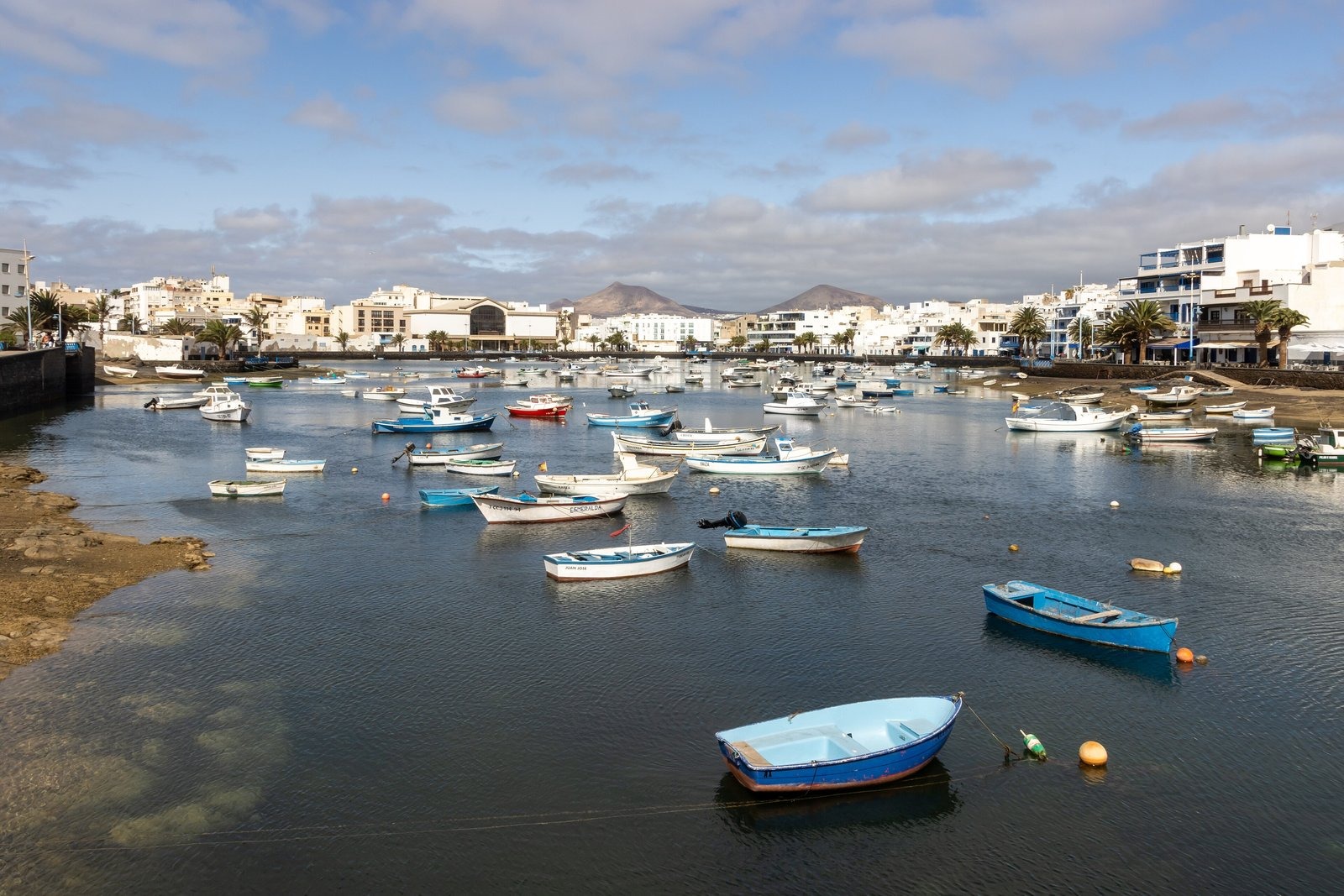
Charco de San Ginés
The saltwater lagoon at the town's core. A 1970 plan would have covered almost a third of it, and Manrique and others drew up a scheme approved in 1974 that kept it intact.
Iglesia de San Ginés
A hermitage of 1574 moved by floods, rebuilt in stone in 1665 and made a parish in 1798, the moment Arrecife marks as the birth of its municipality.
La Recova
The municipal market of the mid-19th century, hidden behind small passageways. Sources disagree on who built it, and its courtyard once held lucha canaria and livestock fairs.
Casa de los Arroyo
An 1739 house with a Canarian patio and carved staircase. It holds the library of the scientist Blas Cabrera and has been the office of the Lanzarote Biosphere Reserve since 2021.
Casa de la Cultura Agustín de la Hoz
Where the first murals César Manrique ever painted, in 1947, were found when rehabilitation began in 2007. Two of the four were lost for good.
Arrecife Gran Hotel
Presented in December 1970 as Lanzarote's first five-star hotel. Fishermen and sailors switched their landmark from the church tower to the hotel, and a fire in November 1994 left it derelict until it was rehabilitated.